Journal / Guide
Published
Updated
8 minutes
How artist merchandise actually works: from first sketch to the fan's doorstep
Short answer: good merchandise is a chain of ten steps, from brief to restock, and most of the work happens before anything is printed. GEKKO Agency has run that chain as one company from Rotterdam since 2013; here is what each of the ten steps is, what it needs from you, and roughly how long it takes.
Ruben Verhagen
Founder and CEO, GEKKO Agency
1. Brief and rights
Who is the artist, who is the audience, what sells today, what are the next twelve months: a tour, an album, a festival season? And who owns what: the name, the logo, the artwork, and where the store lives. A merchandise programme without clear rights ends in a discussion later; we sort it in the first conversation.
2. Design and tech pack
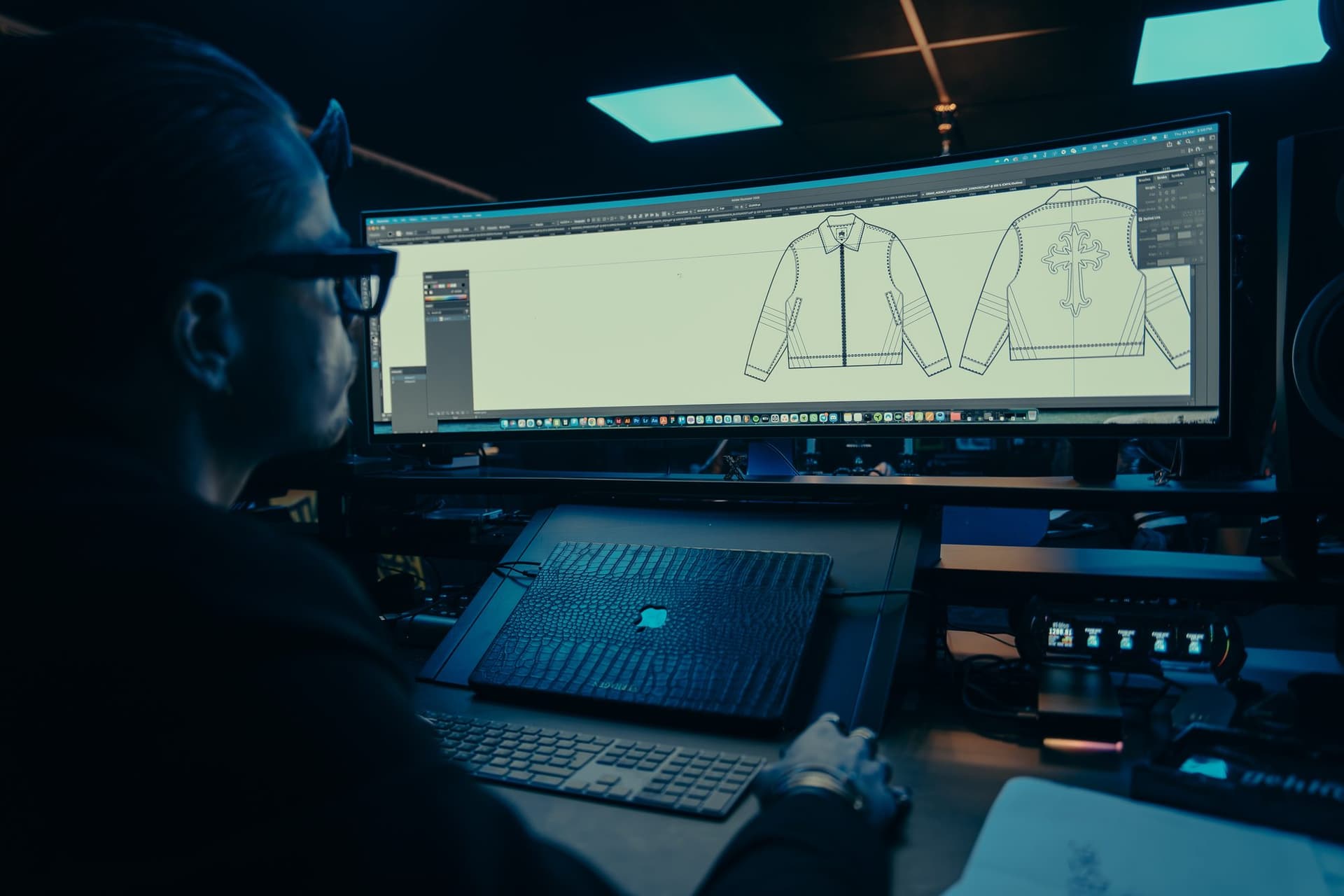
Design is not a logo on a blank. It is the garment: fit, fabric, weight, colour, labels, trims, packaging, and the print or embroidery on it. Our design studio turns the direction into a tech pack, the document a production partner can make the garment from without guessing. You approve the design before anything is made.
3. Sampling
The first physical piece. About two weeks, indicative. You hold it, wear it, and approve it or ask for changes. Usually two rounds are enough. Nothing goes into production before you have said yes to a sample.
4. Production
Four to eight weeks, indicative, depending on the project and the materials. Production runs at fixed production partners, with development, sampling and quality control by GEKKO. We do not publish where production happens, and we do not pretend to be a factory. What we promise is the piece you approved, in the quantity you ordered, checked before it ships.
5. Transport and arrival in Rotterdam
About two weeks. Stock arrives at our own warehouse at Van Graftstraat 10 in Rotterdam, is counted and checked again, and goes onto the shelf under your name. From here every order leaves.
6. The store
We build and run the official store on Shopify: products, drops and pre-orders, payments and taxes for the countries you sell in, and the customer service behind it. You keep the brand, the domain and the customer data. We have built and run 140+ of these stores since 2013, so the set-up is quick; the decisions about what to sell and when are yours.
7. Launch: drop, pre-order or year-round
A drop is a limited release from stock: it creates a moment and sells out. A pre-order sells first and produces after, which removes the stock risk but asks fans to wait. A year-round store keeps a core range in stock and adds drops on top. Most programmes mix all three over a year; we plan that with you against the calendar of tours and releases.
8. Shipping worldwide
Orders are picked and packed in our warehouse in Rotterdam and shipped with tracking to 36+ countries, 100,000+ parcels a year across our clients. Tour merchandise goes to the right venue on the right night and is restocked from the same warehouse.
9. Customer service and returns
Fans write to the artist, not to a logistics company. Our team answers in your name, handles exchanges and returns, and tells you what fans ask, because that is where the next drop comes from.
10. Reporting and restock
You see sales and stock per product and per country. When a size or a style runs low, we flag it and plan the restock, so the store never has to close because something sold better than expected.
How long does artist merchandise take, from brief to launch?
Indicatively, from an approved design: about two weeks of sampling, four to eight weeks of production and two weeks of transport, so eight to twelve weeks until stock is in Rotterdam. The design phase before that depends on how much exists already. A drop from designs and stock we already have runs much faster. We give you an indicative date in the proposal and tell you as soon as it changes.
What do we need from you?
The brand, the audience and the people who decide. Everything else, from the tech pack to the person answering your fans, is ours. That is what one company from first sketch to delivery means. The page on how we work shows the same chain in nine steps, from the side of the collaboration; this guide splits it into ten, from the side of the product.